
From local markets to modern supermarkets, banana leaves are making a meaningful comeback as an eco-friendly replacement for nylon bags in food packaging.
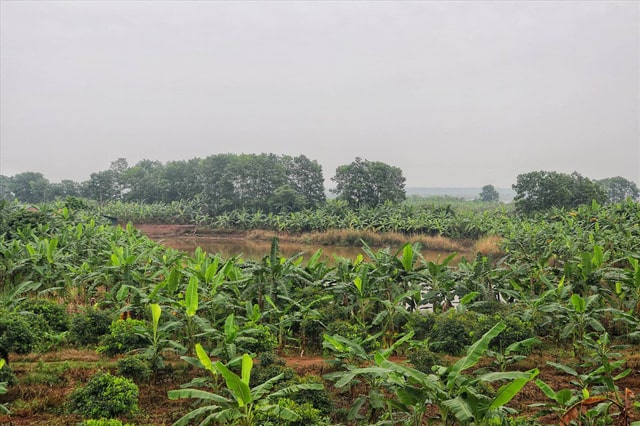
A Story from Trung Chau, Hanoi
In Trung Chau Commune (Dan Phuong District, Hanoi) — home to over 200 hectares of fertile alluvial land — banana farming has long been a way of life. Here, bananas are not only grown for their fruit but also for their leaves, which are known for being thick, flexible, and naturally green all year round — qualities that make them highly sought after by traders.
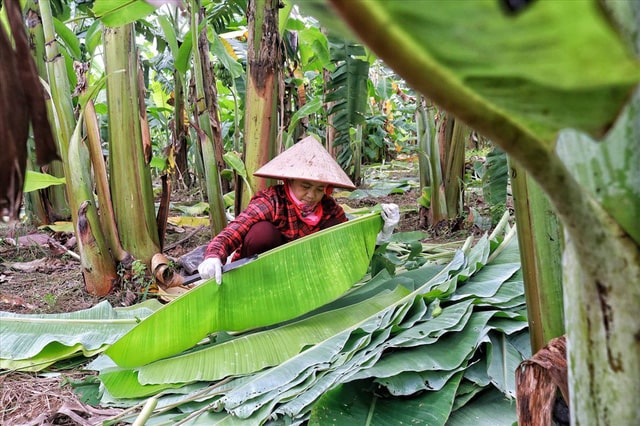
Mrs. Doan Thi Than (52 years old) has been harvesting banana leaves for more than five years.
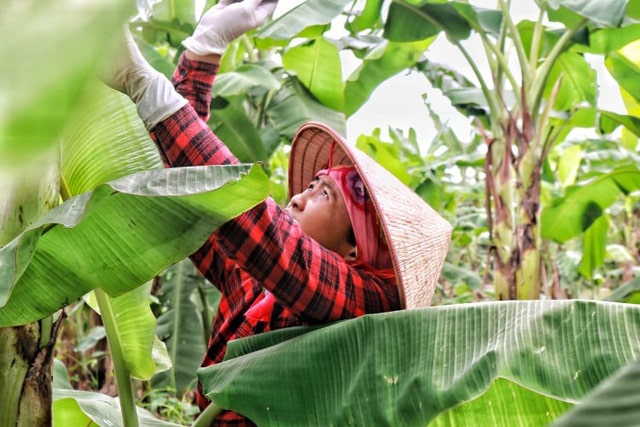
“I used to supply banana leaves to a few households, bakeries, and sausage shops,” she shared. “But since supermarkets started using banana leaves to wrap food instead of plastic, demand has soared. I often wake up before sunrise to cut leaves and fulfill orders for stores in Hanoi.”
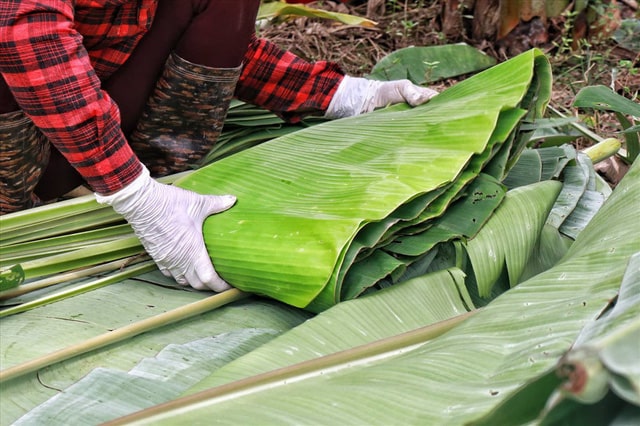
Every day, Mrs. Than harvests around 200 kilograms of banana leaves, selling them for about 10,000 VND per kilogram, earning roughly 2 million VND daily — a significant income for rural farmers.
Hard Work with Hope
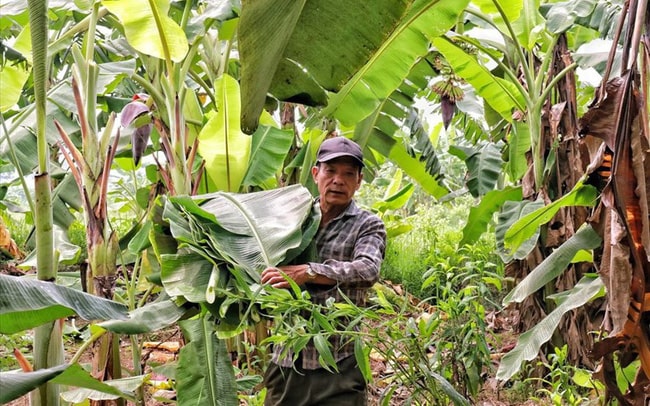
Harvesting banana leaves is labor-intensive work that requires patience and care. Workers must rise early, rain or shine, to handpick each perfect leaf — free from tears or blemishes — to meet the standards of supermarkets and restaurants.
Since Hanoi’s supermarket chains launched a campaign to reduce plastic waste by using banana leaves, the demand for leaves has steadily increased, bringing better livelihoods to local farmers. This shift has not only revitalized a traditional craft but also encouraged sustainable economic growth within the community.
More Than Just a Leaf
For centuries, banana leaves have been an essential part of Vietnamese cuisine — used to wrap Tet cakes, sticky rice, grilled dishes, and vegetarian foods. Today, their role extends beyond cooking, becoming a symbol of environmental responsibility and a return to nature’s simplicity.
The comeback of banana leaves represents a perfect harmony between tradition and modern sustainability, showing how something as humble as a leaf can inspire a greener future for food and packaging.